Specialty

EMR and hospital software for ENT

A structured ear, nose and throat examination, audiograms, and day-case surgery.

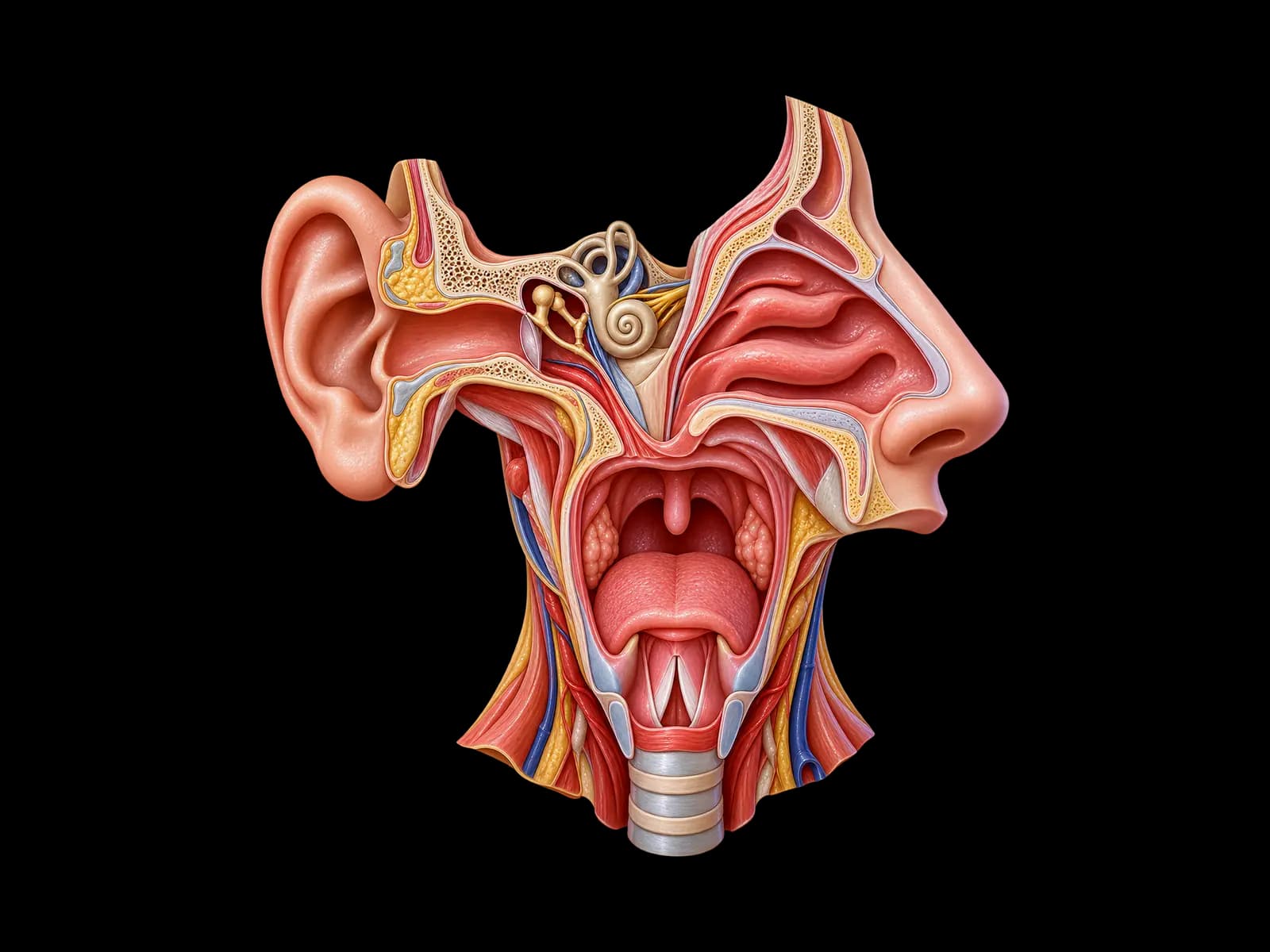
An anatomical cutaway illustration of the ear, nose and throat.

About ENT

Ear, nose and throat surgery treats hearing and balance, the nose and sinuses, the throat and voice, and the head and neck. Many visits pair a consultation with a quick procedure, hearing tests produce numbers that must sit beside the notes, and day-case surgery moves a patient through a bed and back within days.

What the practice sees most

Pharyngitis and tonsillitisSinusitis and allergic rhinitisOtitis media and externaEarwaxHearing lossVertigo (BPPV)EpistaxisTinnitusLaryngitis

What makes this specialty hard to run

The operational problems a system has to answer, before any feature list.

  1. 01

    Many visits combine a consultation with a quick procedure, such as ear wax removal, nasal packing or a scope, on the same day.

  2. 02

    Hearing tests and other investigations produce numbers that need to sit beside the notes.

  3. 03

    Day-case surgery like tonsillectomy moves a patient from OPD to a bed and back to follow-up within days.

  4. 04

    Children and adults share the list, so the record often carries a guardian as well as the patient.

How Nirogix supports ENT

Grouped the way the day runs. Every line says whether it is in the product today or planned.

Available todayPlanned, not available yet

Clinical pathways are reference content your clinical team reviews and edits as its own; nothing is ordered or prescribed until a doctor chooses it. Calculators inform a decision and do not write to the record. A line that needs a particular module names it.

The ENT examination

With the ENT module.

  • Otoscopy and tuning fork tests per ear, with Weber, Dix-Hallpike, nystagmus and neck findings
  • Anterior rhinoscopy and diagnostic nasal endoscopy, with endoscopy images kept in the patient’s documents
  • Oral cavity, tonsils graded, pharynx, larynx and vocal cords
  • Findings that belong to the consultation and lock with the signed note

Audiometry

  • Pure tone audiograms entered per ear, air and bone, with masking, drawn to audiometric convention
  • Three- and four-frequency averages, the air-bone gap and a hearing grade, with the type of loss left to you
  • Tympanometry and speech audiometry beside the audiogram, and a printed audiogram report
  • Thresholds read from the audiometer, and hearing aid dispensing(planned)

Office procedures

  • Microsuction, aural toilet, syringing, foreign body removal, nasal packing, cautery, the Epley maneuver and more, recorded against the patient
  • Each procedure priced from your services catalog on the visit’s invoice

The consultation

  • Twelve ENT pathways ready on day one: pharyngitis, tonsillitis, sinusitis, allergic rhinitis, otitis media, BPPV, epistaxis, tinnitus and more
  • The Centor (McIsaac) score in the consultation
  • Children and adults on one list, with a guardian on a child’s record

Day-case surgery

  • Tonsillectomy and other operations booked as theater cases, with the checklist, consent and a signed operative note
  • A bed, nursing notes and charges on the same record for a day-case stay
  • An ENT-specific operative note(planned)

What changes for the practice

Hearing results that are data

An audiogram is stored per threshold, averaged and drawn, not scanned as a picture.

Procedures billed as they happen

An office procedure is recorded and priced on the same visit.

One examination, every time

The same structured ear, nose and throat sections in every consultation, locked when signed.

Day cases on one record

The clinic, the theater and the bed share the patient’s chart and bill.

The modules a practice like this turns on

Modules are entitlements: enable what you need now and add the rest when you are ready. Nothing is re-implemented per specialty.

What gets configured for you

Minor procedures in the services catalogThe ENT module switched on for the departmentProvider slots that separate procedure time from consulting time

Most specialties differ in configuration rather than code: the same modules are enabled and set up differently. Where a specialty has a module of its own (twenty-three today, from Pediatrics, Obstetrics and Dentistry to Cardiology, Oncology and Nephrology), it is switched on per hospital. Where a specialty needs a capability the platform does not have yet, we say so during the demo rather than after you buy.
Questions we are asked

Do we need the ENT module?

For the structured examination, audiometry and office procedures, yes; it is switched on per hospital. Without it, ENT consultations use the shared clinical notes, pathways and billing.

Does Nirogix connect to our audiometer?

No. Thresholds are entered by your team, then averaged, graded and drawn by the product.

Are the hearing grades clinically confirmed?

The grade follows the WHO World Report on Hearing (2021). The grade bands, the tonsil scale and the masked symbols are named in the product with their source and are being confirmed by an ENT surgeon before customer use.

Can we print an audiogram for the patient?

Yes, as its own report on your letterhead.

See it running with your own workflows.

Book a walkthrough and we will map your clinic or hospital onto the platform, module by module.