Who it is for
BuiltRun your laboratory on its own, with no hospital attached.
Walk-ins and packages at the counter, collection centers and home collection, barcoded samples, results your pathologist verifies, and signed reports patients open on their phone.
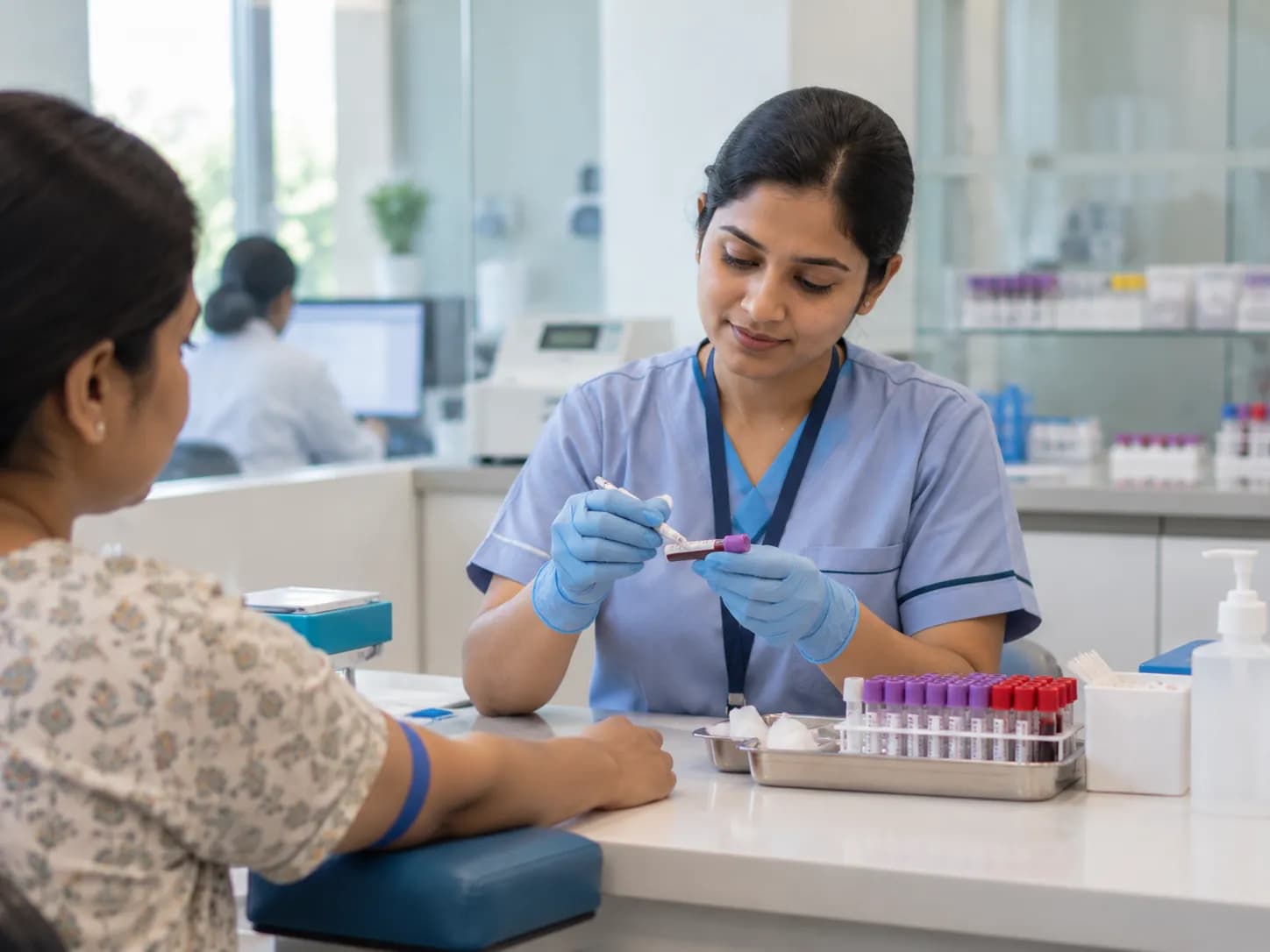
A laboratory lives or dies on turnaround and on not losing samples. Software helps with the first by making the worklist honest, and with the second only if it tracks the sample, which is the part worth asking every vendor about.
What runs today
Everything a laboratory needs to run as a business of its own.
- Set up as a laboratory: Patients, Laboratory, Billing and the patient app, with roles for a pathologist, technician, phlebotomist, front desk and lab administrator
- Walk-in registration with the referring doctor, and the lab counter bill paid at ordering
- Packages and health checkups at one price
- Collection centers and home collection, with samples dispatched together and sent to a reference laboratory where needed
- A numbered, barcode-labeled sample, received or rejected at the bench, with turnaround tracked
- Results against ranges by sex and age, quality control against Westgard rules, and verification by the pathologist
- Reports with the pathologist’s signature and your registration numbers, and a link and QR code the patient opens on their phone
- Branches and collection centers under one organization, with the worklist read one center at a time
Not built yet
What a larger laboratory will ask for next.
- Analyzer interfacing (HL7 and ASTM)(planned)
- Critical-value alerts sent to the ordering doctor(planned)
What this does not do
This suits a laboratory that wants the counter, the samples, the results and the bill in one place. Results are typed in, because there is no analyzer interfacing yet, quality control has no Levey-Jennings chart, and collectors are not tracked live. If a connected analyzer fleet is a dealbreaker, it should be one now rather than after a migration.
Questions we are asked
Do we need the hospital software to use this?
No. Your laboratory is set up as a laboratory, with only the modules and roles a laboratory uses. It is priced as the Diagnostic Laboratory plan, quoted per laboratory. A hospital can run the same laboratory module as its in-house lab, with doctors ordering from the consultation.
Can it talk to our analyzers?
Not today. HL7 and ASTM interfacing is planned and is built for the devices a customer actually owns.
Are you NABL compliant?
Accreditation belongs to your laboratory, not to our software. Pathologist verification, quality control against Westgard rules and your registration numbers on the report are built; we would rather say plainly what is not.
How do reports reach the patient and the referring doctor?
The patient gets a printed report and a link and QR code that opens the results on their phone. The referring doctor is named on the report; sending it to the doctor is not built.
Who else it serves
Clinic Software for an Individual Doctor
BuiltRegister a patient, write the consultation, print the prescription, take the payment. It is the same platform a 200-bed hospital would run on, not a cut-down copy of it.
Software for a Single-Location Clinic
BuiltFront desk, doctor, pharmacy and cashier working from the same visit, which is where a clinic’s lost revenue and re-typed data both come from.
Software for a Multi-Doctor Clinic or Polyclinic
BuiltPer-doctor availability and per-doctor queues on a shared record, with roles that actually differ and an audit trail that names a person.
Software for a Medical Store or Retail Pharmacy
BuiltWalk-in and credit sales, outside prescriptions, purchasing, batches and expiry, a cash drawer per shift, GST invoices and monthly returns prepared, for one store or a chain.
See it running with your own workflows.
Book a walkthrough and we will map your hospital, clinic, laboratory or medical store onto the platform, module by module.